
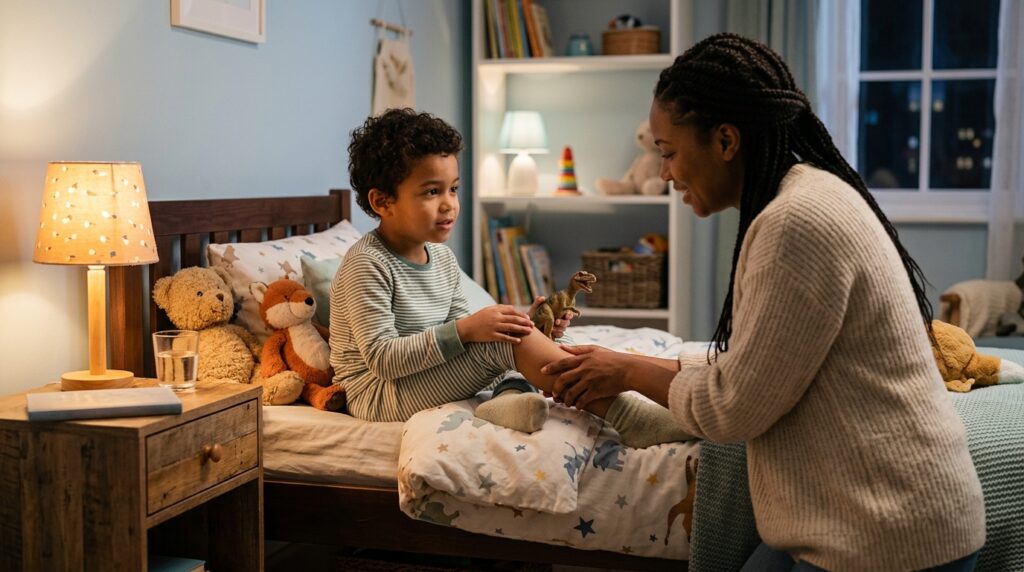
You are probably reading this at 2 a.m., sitting on the edge of your child’s bed after another round of leg rubs and warm compresses.
I get it. You have tried everything. You have Googled “severe growing pains in 4 year old” half a dozen times. You have asked your pediatrician if this is normal. You have wondered if your child is somehow broken, or if you are missing something serious.
Here is the thing: growing pains in children are not some vague, untouchable mystery. They are a real physical response to a combination of rapid skeletal development, muscular tension, and nervous system fatigue. And while the name “growing pains” makes it sound inevitable, like something you just have to endure until your kid hits middle school, the truth is far more mechanical than that.
Over 15 years of working with families in Mesa, I have watched parents cycle through the same frustrating loop. Their child wakes up crying with leg pain. They massage the calves. They apply heat. The pain fades. Everyone falls back asleep. Then it happens again three nights later.
The problem is not that you are doing the wrong things. The problem is that you are treating the flare-up without addressing the structural tension that keeps lighting the match.
Key Takeaways
- Prevalence Data: 36.9% of young children experience recurrent leg pains, with peak occurrence in two distinct age windows: ages three to five and eight to twelve years.
- Biomechanical Mechanism: Long bones lengthen faster than surrounding muscles and tendons can stretch during rapid growth, creating mechanical tension at muscle-bone attachment sites packed with pain-sensing nerve endings.
- Postural Analysis: In a 2025 study of 647 children with growing pains, 87% demonstrated posterior foot-loading orientation; personalized plantar insoles produced clinically meaningful pain reduction by correcting weight distribution.
- Exercise Fatigue: Extreme fatigue after exercise carries an odds ratio of 15.55 for growing pains occurrence, indicating physically exhausted children are significantly more likely to wake with nighttime leg pain.
- Vitamin D Deficiency: 86.6% of 120 children diagnosed with growing pains had vitamin D insufficiency; a single oral vitamin D dose significantly decreased mean pain intensity scores in a 2015 prospective cohort study.
What Do Growing Pains in Children Feel Like?
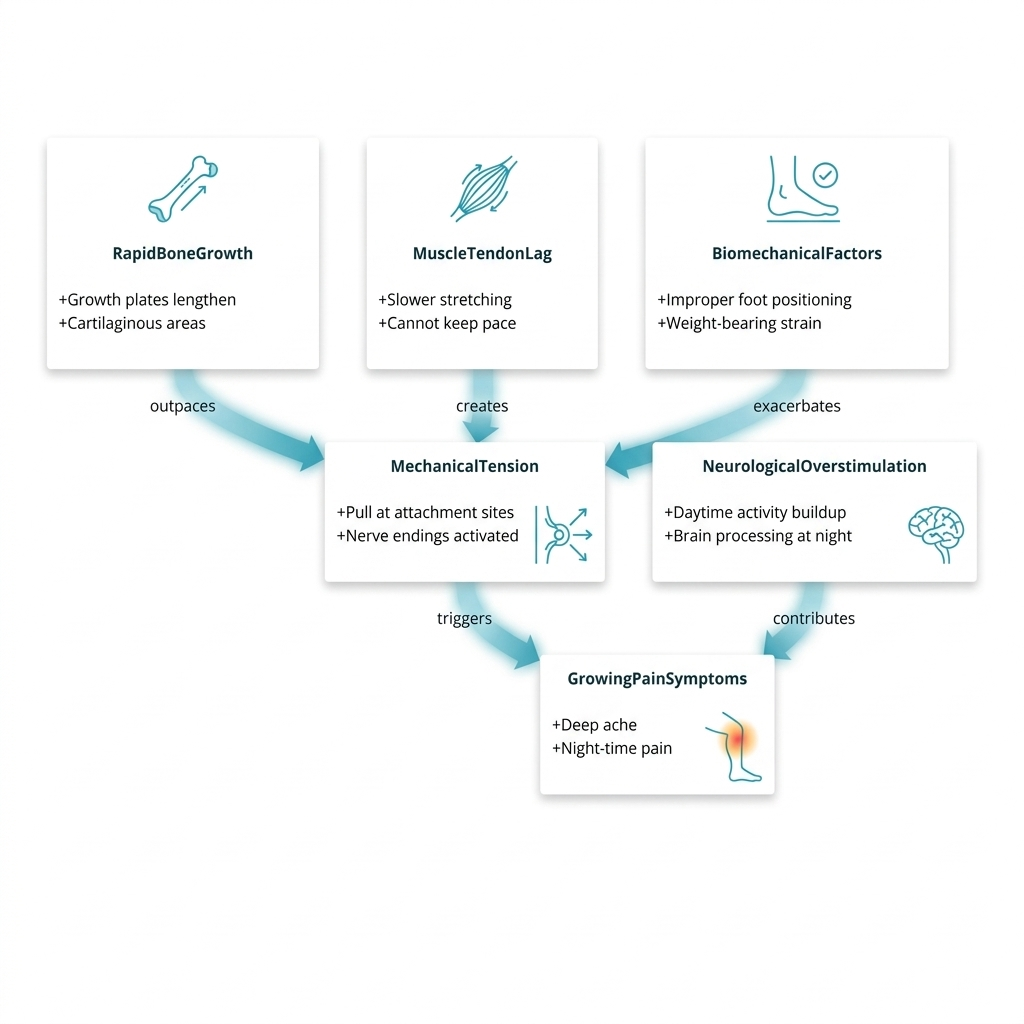
Growing pains typically manifest as intense leg pain that occurs at night in children. The discomfort results from a mechanical mismatch during rapid bone growth, where long bones develop faster than surrounding muscles and tendons can stretch. This creates pulling tension at attachment sites where muscle meets bone, particularly after active days of running and playing.
The Scope of the Problem
Let’s start with the data, because this is not some rare complaint affecting a handful of unlucky kids.
A 2004 community study estimated that 36.9% of young children experience recurrent leg pains. That is more than one in three kids. If you are a working parent juggling a desk job and the physical demands of raising children, you have probably seen this in your own household or heard about it from other parents at pickup.
The typical growing pains age falls into two distinct windows: ages three to five (the preschool years) and again between eight and twelve. The discomfort does not strictly correlate with adolescent growth spurts, which is why the name “growing pains” is misleading. An adolescent growth spurt is when a teenager’s body shoots up several inches in a short stretch of time, usually around puberty, but these leg pains often show up years earlier or later, when growth is steady and slow. Your child’s bones are not physically hurting as they lengthen. Instead, what you are seeing is a mismatch between how fast the skeletal structure is developing and how quickly the surrounding soft tissue can adapt.
Think of it like this: the long bones in your child’s legs are the mast of a ship. The muscles and tendons are the rigging. During periods of rapid bone growth, the mast shoots up faster than the rigging can stretch. That creates a mechanical pull on the attachment sites, the spots where muscle meets bone. Add in a full day of running on hard playground surfaces, climbing on equipment, and overstimulating a developing nervous system, and you get intense leg pain in children at night.
Simply Put
Picture a tent pole growing taller while the guy-lines stay the same length: the fabric starts pulling tight at every stake in the ground. During rapid bone growth, your child’s long leg bones lengthen faster than the muscles and tendons wrapped around them can stretch. Those muscles anchor to the bone at specific attachment sites, and when the bone shoots up, the soft tissue gets pulled taut like those guy-lines. After a full day of running and climbing, those attachment points are already working overtime, so the tension shows up as deep leg pain at night when everything finally goes still. The mismatch is temporary: the soft tissue catches up, the tent settles, and the pulling eases.
Is It Normal for a Child to Have Growing Pains?
Yes, growing pains are a normal childhood condition affecting many children. They typically present as bilateral leg discomfort in the calves, shins, or thighs, occurring in the evening or night. The pain is intermittent, usually mild to moderate, and resolves within 30 minutes to a few hours without causing joint swelling or morning symptoms.
What Growing Pains Actually Feel Like
When parents ask me what growing pains symptoms look like, I tell them to listen to how their child describes it.
In a 2025 study authored by Ruoyi Guo and colleagues analyzing pediatric pain reports, 42.8% of children described their growing pains as a “dull ache,” while 41.7% reported soreness accompanied by a distending sensation. Distending means a feeling of stretching or pulling outward, the way a balloon feels tight when you blow air into it. On a pain scale from 1 to 10, most kids score it between 2 and 6, with the highest proportion landing at a 4. That is not excruciating, but it is enough to wake them up and keep them from falling back asleep.
The discomfort is almost always bilateral, affecting both legs rather than just one. Bilateral means both sides at once, like how your shoes wear down on the left and right foot together rather than just one. It is most commonly felt in the calves, shins, or thighs, but it distinctly spares the joints. There is no swelling. No redness. No localized tenderness when you press on a specific spot. The pain shows up late in the day, in the early evening, or in the middle of the night, and it is completely absent in the morning.
Individual episodes are relatively brief. Most resolve within 30 minutes to a few hours, often responding to simple massage or over-the-counter pain relievers. But the condition is intermittent. It does not happen every night. Instead, you will see spells that occur weekly, monthly, or quarterly, making it hard to predict when the next round is coming.
What is the Main Cause of Growing Pains?
Growing pains result from two primary mechanisms: rapid bone growth that outpaces muscle and tendon stretching, creating mechanical tension at attachment sites, and neurological overstimulation from daytime physical activity. Biomechanical factors like improper foot positioning can exacerbate the condition by placing additional strain on lower leg muscles and tendons during weight-bearing activities.
The Biomechanical Truth Behind the Ache
So what causes growing pains, really?
Despite being described in medical literature since 1823, the exact mechanism is still not fully understood. But we have strong clinical models that explain what is happening in the body.
The Growth Lag Model
Long bones grow at the growth plates—cartilaginous areas near the ends of bones. Cartilage is the smooth, flexible tissue that acts like a cushion pad between harder structures: it’s firm enough to hold its shape but bendable enough to absorb force, the same material that gives your ear its shape when you fold it and it springs back. During periods of rapid development, these bones can lengthen faster than the surrounding muscles and tendons can stretch. That creates a temporary mechanical pull on the muscle attachment sites, which are richly supplied with pain-sensing nerve endings.
What This Means for You
Picture a drawbridge rising while the ropes that control it stay the same length: the higher the bridge climbs, the tighter those ropes pull where they’re bolted to the tower. During a growth spurt, your child’s leg bones lengthen at the growth plates near the ends, sometimes faster than the muscles and tendons wrapped around them can stretch to match. That creates a mechanical pull at the attachment sites, the spots where muscle anchors to bone, and those spots are packed with nerve endings that register tension as a deep ache. The mismatch is temporary, the muscles do catch up, but while the bones are outpacing the soft tissue, the pull is real, and your child feels it most at night when there’s nothing else to distract the brain from that low, steady tug.
In a 2025 postural analysis of 647 children with growing pains conducted by Ionita and colleagues, published in the Journal of Medicine and Life, 87% demonstrated a posterior foot-loading orientation. That means when they stood or walked, their weight was shifting toward their heels instead of spreading evenly across the whole foot, the way a rocking chair tips back if you lean too far: all the work lands on the back edge, and the muscles in the lower leg have to pull harder to keep everything balanced. That means the way their foot was absorbing weight during standing and walking was placing additional strain on the muscles and tendons of the lower leg. When researchers corrected this imbalance with personalized plantar insoles, they saw clinically meaningful improvements in subjective pain reports.
The takeaway: how your child’s foot hits the ground matters. A lot.
Neurological Overstimulation
High levels of daytime physical activity can overstimulate a child’s developing nervous system. When sensory distractions drop at night, no more running, no more noise, no more visual input, the brain perceives residual muscular fatigue as a deep, aching pain.
The same 2025 study by Guo and colleagues identified “extreme fatigue after exercise” as an independent risk factor for the occurrence of growing pains, with an odds ratio of 15.55. That is a massive correlation. Kids who are physically exhausted during the day are far more likely to wake up with leg pain at night.
This is not about telling your child to stop playing. It is about recognizing that their nervous system is processing a huge amount of mechanical input during the day, and that processing does not shut off the moment they fall asleep.
Restricted Joint Mobility
Restricted joint motion in the spine and pelvis alters the sensory feedback loop to the brain. When spinal joints are not moving properly, the nervous system compensates by heightening pain sensitivity in the lower extremities.
I see this pattern constantly in our 45-minute consultations. A child comes in with nighttime leg pain, and when we measure their spinal alignment and joint mobility, we find restrictions in the lower lumbar spine or sacroiliac joints. Those restrictions force the leg muscles to overwork during the day to maintain balance, leading to nighttime cramps and aches.
When Should I Worry About My Child’s Leg Pain?
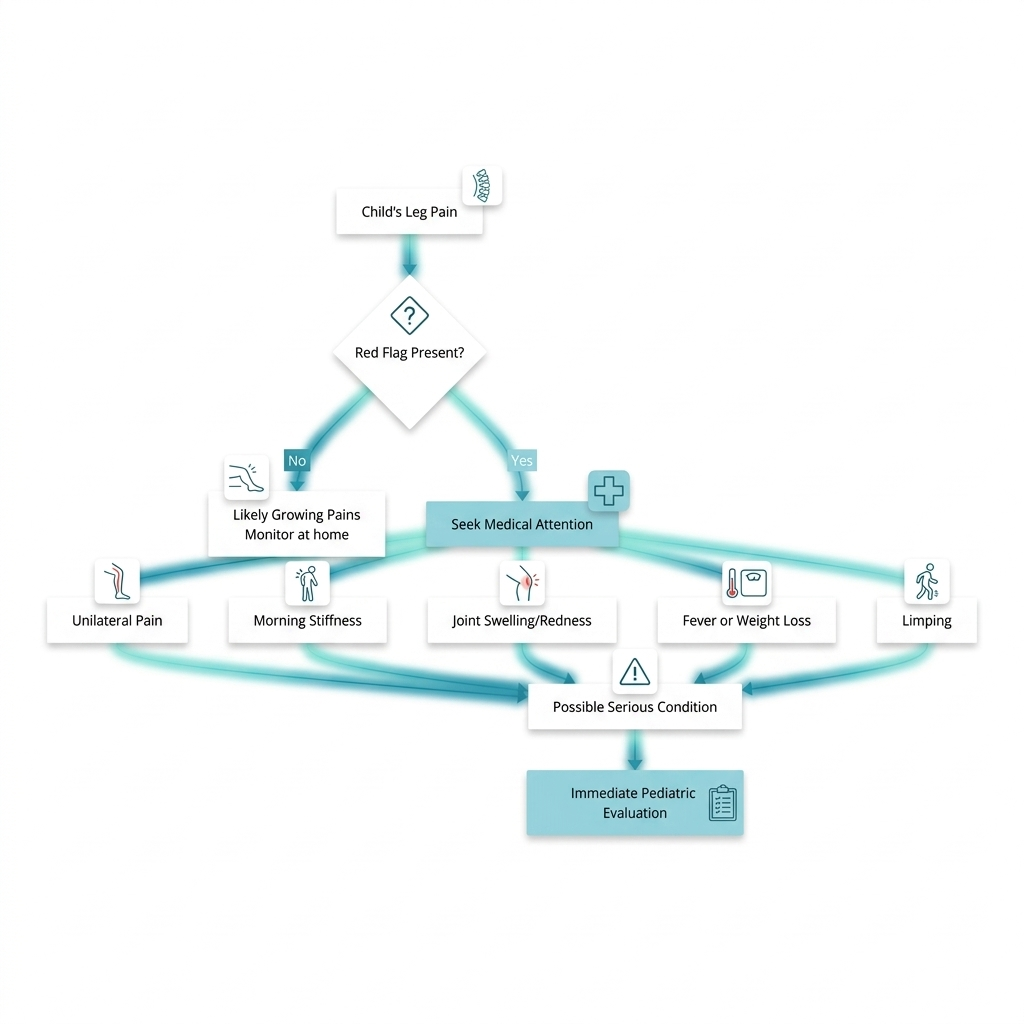
Seek immediate medical attention if a child experiences leg pain with unilateral symptoms, morning stiffness, joint swelling or redness, fever, unexplained weight loss, lethargy, or limping. These warning signs may indicate serious conditions like juvenile arthritis, infections, or malignancy rather than benign growing pains, which are bilateral, nighttime-only, and never cause systemic symptoms or joint involvement.
When to Stop Worrying, and When to Start
Growing pains are a benign, self-limiting syndrome. They resolve on their own within a few years as the child ages, and they almost universally cease by adolescence.
But here is the critical distinction: true growing pains never cause joint swelling, redness, fever, or unexplained weight loss.
If your child is experiencing any of the following, you need to stop reading this article and call your pediatrician:
- Unilateral pain: Pain that consistently affects only one leg is a red flag. Benign growing pains are bilateral.
- Morning stiffness: Experiencing stiffness or pain in the morning is highly atypical and may indicate an inflammatory joint condition like Juvenile Idiopathic Arthritis.
- Joint involvement: Pain accompanied by joint swelling, redness, or decreased range of motion requires immediate evaluation.
- Systemic symptoms: Leg pain accompanied by fever, weight loss, lethargy, or malaise should trigger an immediate workup to exclude serious conditions like infections or malignancy.
- Limping or mobility issues: A reluctance to walk, limping, or a stiff-legged gait is not characteristic of growing pains and may suggest conditions like Benign Acute Childhood Myositis or orthopedic trauma.
I have seen cases where parents were told their child had growing pains, only to later discover the child had acute lymphoblastic leukemia. That is rare, but it happens. Any pain accompanied by visible swelling, persistent limping, or systemic illness requires immediate referral to a pediatrician or emergency department before any chiropractic care is administered.
Restless Leg Syndrome Vs. Growing Pains
One of the most common clinical mix-ups I see is confusing growing pains with Restless Leg Syndrome (RLS).
Pediatric RLS has a prevalence of approximately 2% and is characterized by an uncomfortable sensation and an irresistible urge to move the legs. Unlike the deep, dull ache of growing pains, RLS feels like a crawling or tingling sensation. Kids will describe it as needing to move their legs to make the feeling go away.
Growing pains, on the other hand, are a deep muscle ache. The child wants you to massage the area, not move it.
The Simple Version
Picture two different alarm systems in your leg: one is a deep bell ringing in the muscle, steady and dull, like someone pressing their thumb into clay. That’s the ache of growing pains, a pressure that makes your child want you to rub the spot until the bell stops. The other alarm is a swarm of ants crawling under the skin, restless and electric, impossible to ignore. That’s the tingling, crawling sensation of a neurological condition like Restless Leg Syndrome, and it makes your child want to kick and move their legs to shake the swarm away. The bell says “press here.” The swarm says “move now.” When your child wakes at night, listen to which alarm is ringing: if they’re reaching for the sore spot and asking you to squeeze it, you’re hearing the muscle bell. If they’re kicking their legs under the covers, trying to outrun the feeling, that’s the neurological swarm, and it needs a different conversation with your doctor.
If your child is describing an urge to move rather than an ache, that is a different neurological condition and requires a different approach.
How Long Do Growing Pains Last in Children?
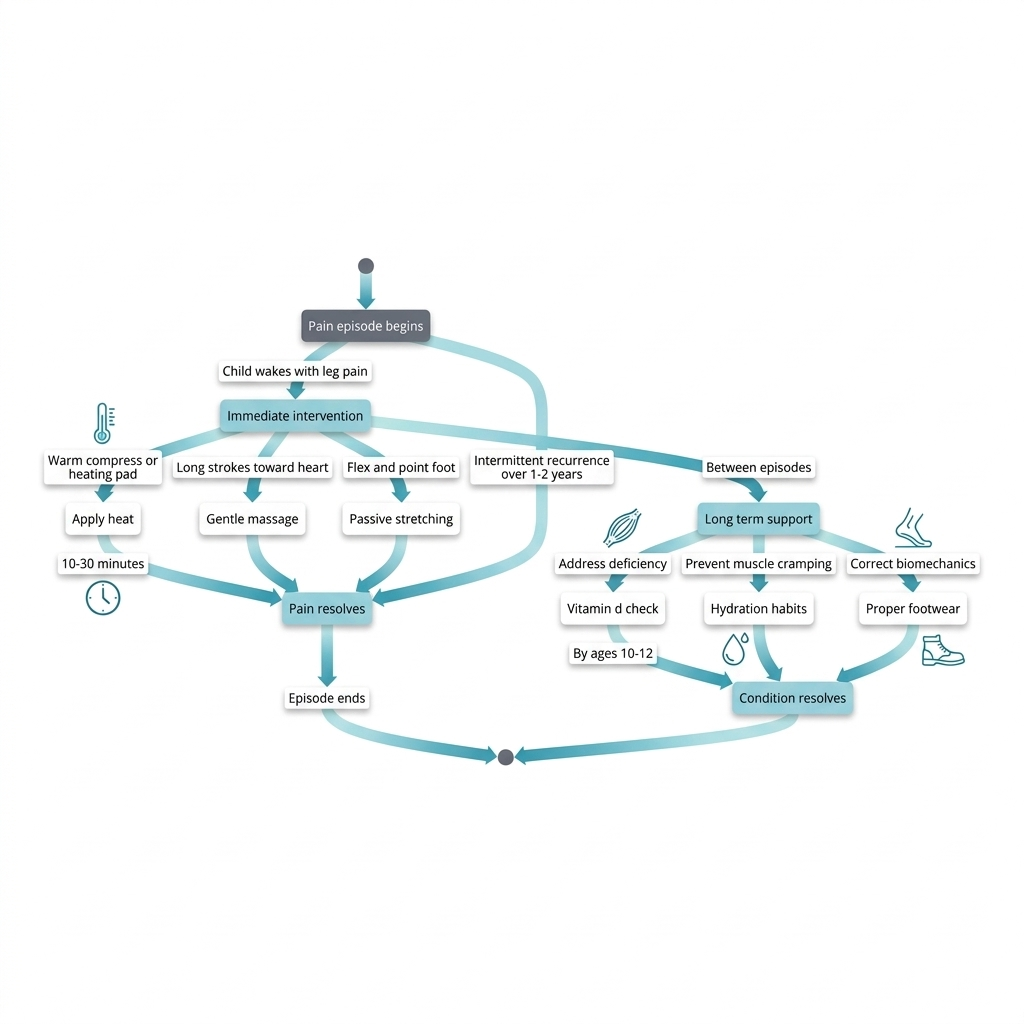
Growing pains typically last from one to two years, though episodes occur intermittently rather than continuously. Individual pain episodes usually resolve within 10 to 30 minutes with appropriate intervention like heat application, massage, and stretching. The condition generally resolves completely as children mature, most commonly disappearing by ages 10 to 12.
How to Relieve Growing Pains at Home
When a toddler wakes up crying with leg pain at 2 a.m., you need immediate relief strategies that actually work.
Immediate Nighttime Relief
- Apply warmth: Use a warm compress or heating pad on the affected area. Heat relaxes tight muscles and increases blood flow to the tissue.
- Gentle massage: Use long, slow strokes moving toward the heart. This helps relax the muscle and calm the nervous system.
- Passive stretching: Gently flex and point the foot, or help your child perform a slow calf stretch. Do not force it. The goal is to ease tension, not create more.
These are not magic fixes. They are mechanical interventions that reduce the immediate tension in the muscle-tendon unit.
Nutritional and Hydration Support
I am not telling you to start dosing your child with supplements without talking to your pediatrician first. But if your child is experiencing frequent nighttime leg pain, it is worth asking your doctor to check their vitamin D levels.
Magnesium is another nutrient that supports muscle relaxation. Some parents report that magnesium supplementation helps reduce the frequency of growing pains episodes, though the research here is less robust than it is for vitamin D.
Hydration matters, too. Dehydrated muscles are more prone to cramping and fatigue. Make sure your child is drinking enough water throughout the day, especially if they are physically active.
Optimizing Footwear and Daily Ergonomics
This is where the boring, non-heroic habits come in.
Inspect your child’s shoes for uneven wear. If the sole is wearing down more on one side than the other, that is a sign of a biomechanical imbalance. Think of it like a boat listing slightly to one side: when your child’s weight consistently shifts more onto the inside or outside edge of the foot as they walk, the shoe sole wears down unevenly in that spot, showing you which direction the imbalance is pulling. Avoid flat, unsupportive shoes like cheap canvas sneakers or slip-ons. Your child’s foot needs proper arch support, especially if they are on hard surfaces all day.
The American Chiropractic Association recommends that a child’s backpack weigh no more than 5 to 10 percent of their body weight. If your 40-pound child is hauling a 10-pound backpack to school every day, that is placing unnecessary mechanical stress on their developing spine and altering their gait.
Small adjustments. Quarter-turns of attention. These are the things that add up over time.
Establishing a Calming Evening Routine
Use warm baths to transition your child’s nervous system into a resting state before bed. Add in some gentle, passive stretching; nothing intense, just slow calf and hamstring stretches while they are relaxed.
A 2025 parental survey analysis found that prolonged sleep latency (taking 30 to 60 minutes to fall asleep) is an independent risk factor associated with a higher prevalence of growing pains in children. Sleep latency is the stretch of time between when your child’s head hits the pillow and when they actually fall asleep, the way a car engine takes time to cool down after a long drive. If your child is struggling to fall asleep, that is not just a sleep problem. It is a nervous system problem.
Create a consistent bedtime routine that signals to the brain that it is time to wind down. Dim the lights. Turn off screens. Use white noise if needed. The goal is to help the nervous system downshift from the overstimulation of the day.
In Plain English
Your child’s nervous system is like a car engine that’s been running hard all day: it doesn’t go from highway speed to parked in one instant. After school, sports, screens, and the general hum of being a kid, the system is still revving when their head hits the pillow. A warm bath and slow stretches before bed are the gentle taps on the brake pedal, signals that it’s time to coast instead of accelerate. When the nervous system gets that signal, it has a better chance to downshift toward rest, and muscles that were holding tension all day may finally get permission to let go.
When Should My Child See a Pediatric Chiropractor?
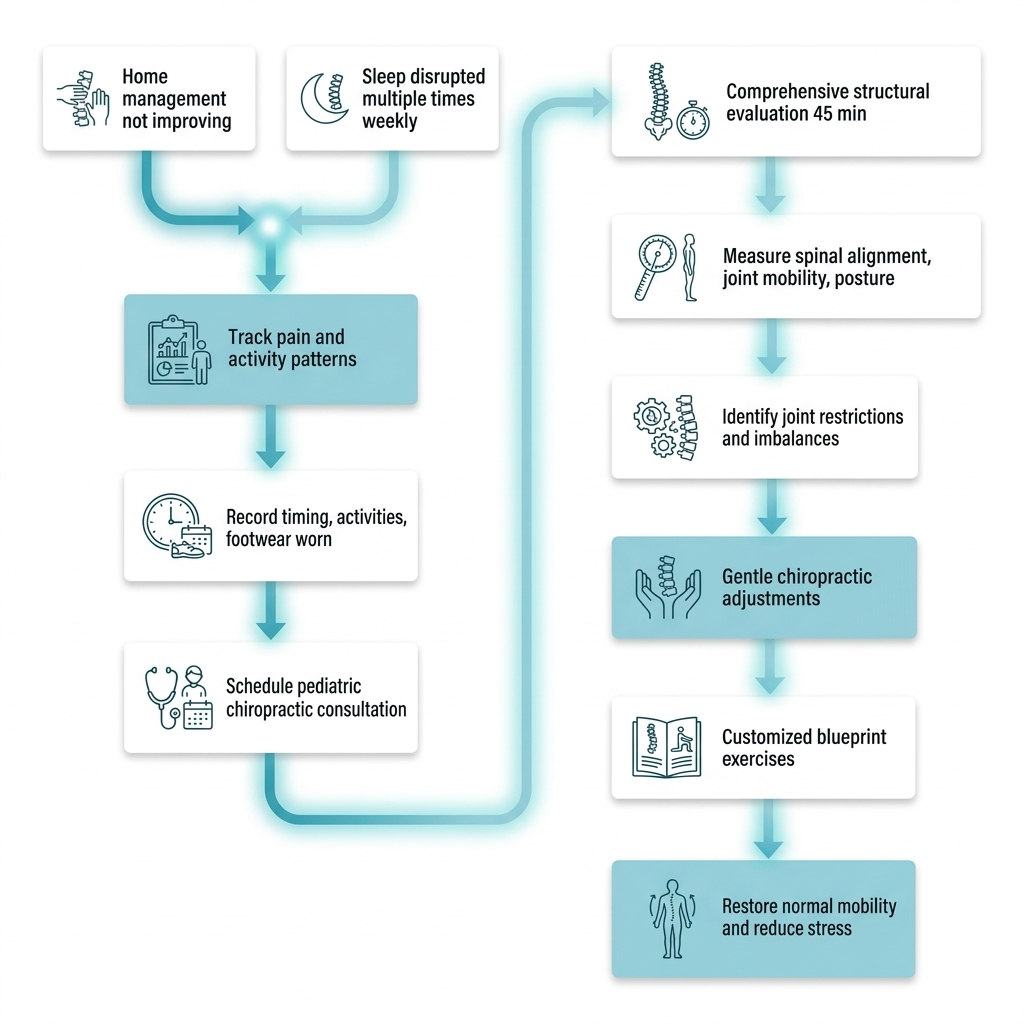
Children should see a pediatric chiropractor when home management shows no improvement or when growing pains disrupt sleep multiple times weekly. Before scheduling, parents should track pain patterns, activities, and footwear to identify mechanical triggers. A comprehensive structural evaluation can identify joint restrictions and biomechanical imbalances contributing to nighttime pain through objective measurements.
When to Seek Professional Pediatric Chiropractic Care
If you are managing growing pains at home and seeing no improvement, or if the episodes are frequent enough that they are disrupting your child’s sleep multiple times per week, it is time to dig deeper.
Tracking the Data
Before you schedule a appointment, start keeping a detailed pain and activity log. Note the exact days and times the pain occurs, what your child did during the day (sports practice, playground time, long car ride), and what footwear they were wearing.
This data helps providers identify mechanical triggers. If the pain always happens after soccer practice, that is a clue. If it happens more frequently on days when your child wears a specific pair of shoes, that is another clue.
The Measurement-Based Pediatric Consultation
At Simon Chiropractic Center, we perform a comprehensive, 45-minute structural evaluation using objective neurological and postural measurements. We are not looking to sell you a cookie-cutter package of 30 adjustments. We are looking to identify specific joint restrictions and biomechanical imbalances that are contributing to the nighttime pain.
Our process begins with listening. What does your child’s pain feel like? When does it happen? What makes it better or worse? Then we move to objective measurement: spinal alignment, joint mobility, postural balance, and foot mechanics.
If we find restricted joint motion in the spine or pelvis, we use safe, gentle chiropractic adjustments to restore normal mobility. This reduces mechanical stress on the kinetic chain and calms the nervous system. The kinetic chain is the linked system of joints from your foot through your ankle, knee, hip, and up into your spine: when one joint moves stiffly or out of alignment, every joint above and below it has to compensate, the way a crooked wheel makes the whole cart wobble. We then prescribe customized “blueprint” exercises designed to improve the effectiveness of the spinal corrections by 30-40%.
Simply Put
Picture a row of dominoes standing on your kitchen table: tap the first one and the motion travels down the line, each piece nudging the next until the last one falls. The kinetic chain is that same principle inside your body. When one joint moves, or when one area gets stuck and can’t move the way it should, the effect doesn’t stay local. A restriction in your child’s spine or pelvis can send ripples of stress through the hips, down into the knees, and all the way to the feet. The dominoes are always connected. When a provider tracks pain patterns and footwear alongside a structural evaluation, they’re looking for which domino might be tipping first, which restriction might be starting the ripple that ends in nighttime leg pain.
Asking the Right Diagnostic Questions
When you meet with any provider, chiropractor, pediatrician, physical therapist, ask them to explain the specific joint restrictions affecting your child’s gait. Ask them what objective metrics they are using to track progress.
If the answer is vague or relies solely on subjective pain reports, that is a red flag. You want a provider who can show you measurable changes in spinal alignment, joint mobility, or postural balance over time.
Do Growing Pains Cause Long-term Damage to Children?
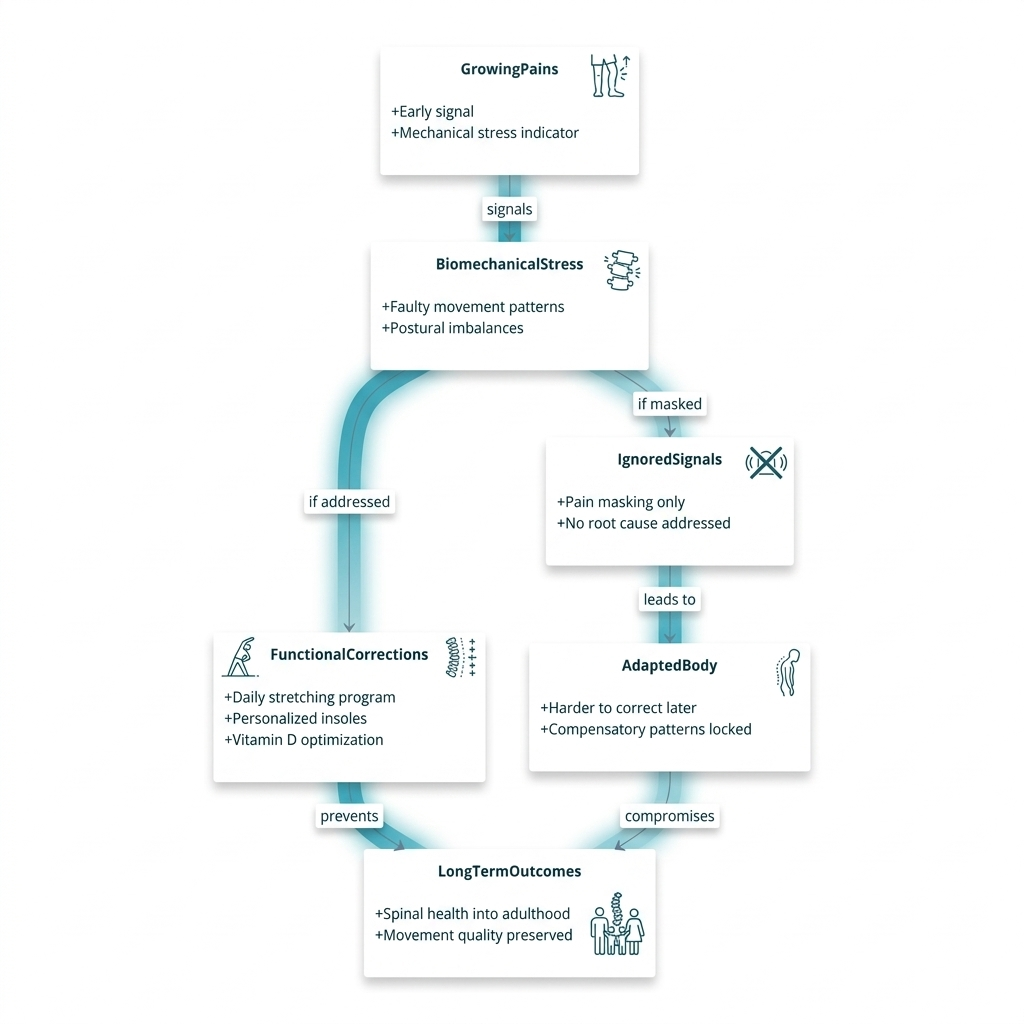
Growing pains themselves do not cause permanent damage, but ignoring the underlying biomechanical stress they signal can lead to long-term musculoskeletal issues. When left unaddressed, children may develop faulty movement patterns and postural imbalances that become harder to correct as the body adapts over time, potentially affecting spinal health into adulthood.
The Long-Term Story of the Body
Growing pains are not just about the immediate discomfort. They are an early signal that your child’s developing musculoskeletal system is under mechanical stress.
If you ignore that signal and rely solely on pain relievers to mask the symptoms, you are not addressing the root biomechanical cause. Biomechanical stress is the wear pattern that develops when forces move through your body in ways the frame wasn’t designed to handle, like a door hinge that’s been mounted slightly crooked and now grinds instead of swinging smooth. You are just turning down the volume on the alarm.
The research is clear: a daily muscle stretching program targeting the quadriceps, hamstrings, and gastrocnemius-soleal groups can reduce the frequency of pain episodes from 10 per month to zero over an 18-month period. The gastrocnemius-soleal group is the calf: the thick band of muscle that runs from the back of your knee down to your heel, the one that tightens when you stand on your toes or push off to run. Correcting foot posture with personalized insoles produces clinically meaningful improvements in subjective pain reports. Ensuring adequate vitamin D levels significantly reduces pain intensity over a 3-month follow-up period.
These are not magic cures. They are small, boring habits that build a strong foundation for long-term spinal health.
As parents shift toward functional wellness, they realize that maintenance beats rescue. It is easier to prevent biomechanical imbalances from developing in the first place than it is to correct them years later when the body has already adapted to faulty movement patterns.
How Can We Help Our Child Sleep Through Growing Pains?
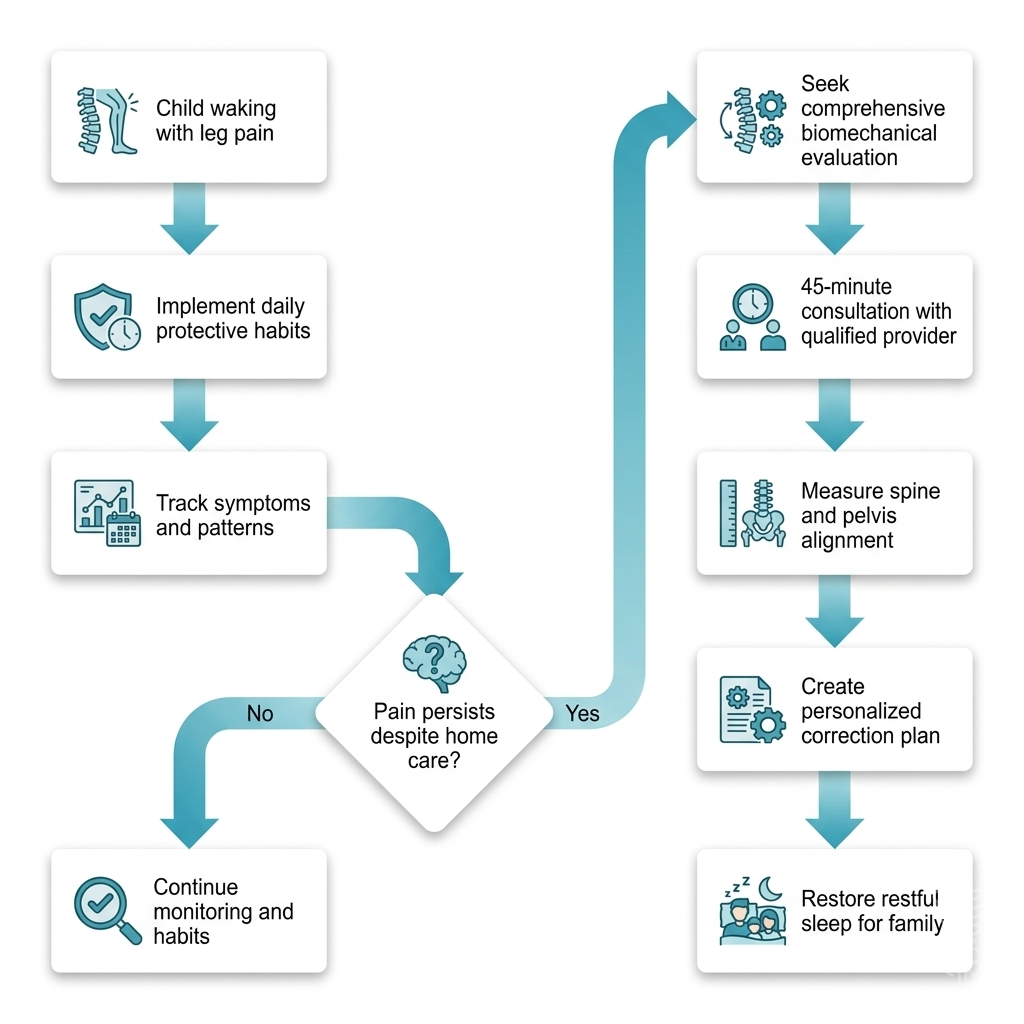
Help children sleep through growing pains by protecting their developing spine with consistent daily habits and tracking symptoms. If nighttime waking persists despite home care efforts, seek a comprehensive biomechanical evaluation from a qualified provider who can measure spinal and pelvic alignment, identify structural issues, and create a personalized plan to restore restful sleep.
Reclaiming Your Family’s Rest
Growing pains are real. They are not a myth, and they are not something you just have to wait out.
They are a tangible sign of structural and neurological adaptation in a rapidly developing pediatric musculoskeletal system. The musculoskeletal system is everything that holds your child upright and lets them move: bones, muscles, tendons, and ligaments working together like the frame and rigging of a ship. And while they are benign and self-limiting, they are also an opportunity to teach your child that their body deserves quarter-turns of attention.
What This Means for You
Picture a house settling on its foundation: as the frame expands in summer heat, you might hear a creak in the walls or a pop in the floorboards, small sounds of wood and nails adjusting to new dimensions. Your child’s growing bones are lengthening while the surrounding muscles, nerves, and soft tissues adapt to keep up, and those nighttime aches may be the physical signals of that adjustment happening in real time. The sensations are real, not imagined, even though they resolve on their own. Just like you’d keep an eye on which rooms in the house creak most often, tracking when and where your child feels discomfort helps you notice patterns and decide whether the structure needs a closer look from someone who measures foundations for a living.
Protect your child’s developing spine. Implement the boring daily habits. Track the data. And if the nighttime waking continues despite your best efforts at home, seek a comprehensive, measurement-based evaluation from a provider who understands the biomechanical story behind the pain.
If you are in Mesa, Arizona, and you are ready for an honest, no-pressure consultation, contact Dr. Andrew Simon at Simon Chiro Center. We will sit down for 45 minutes, listen to your child’s story, measure what is actually happening in their spine and pelvis, and give you a clear plan for restoring peaceful nights to your home.
No cookie-cutter packages. No high-pressure sales tactics. Just real data and sustainable support.
Article Citations:
- Growing Pains: When to Be Concerned (Sports Health, 2017)
- Risk factor analysis for growing pains in children: Results of parental survey (J Child Orthop, 2025)
- Growing pains: What do we know about etiology? A systematic review (World J Orthop, 2019)
- Risk factors associated with growth pain disorder in children: a systematic review and meta-analysis (Frontiers in Pediatrics, 2026)
- Assessments, diagnostic criteria and outcome measures for growing pains and persistent pain in the presence of restless leg syndrome in children: a scoping review (BMJ Open, 2025)
- Backpack Safety Checklist – American Chiropractic Association
The information provided on this website is for educational and informational purposes only. It is not intended to be a substitute for professional medical advice, diagnosis, or treatment. Always seek the advice of your physician or another qualified health provider with any questions you may have regarding a medical condition or the health and wellness of your family members.
Never disregard professional medical advice or delay in seeking it because of something you have read on this website. Chiropractic care and health outcomes are highly personal. Individual results vary and depend on a variety of factors unique to each person. Reliance on any information provided by this website is solely at your own risk.
If you think you may have a medical emergency, call your doctor, go to the nearest hospital emergency department, or call emergency services immediately. This content is provided for general knowledge and does not establish a formal doctor and patient relationship.